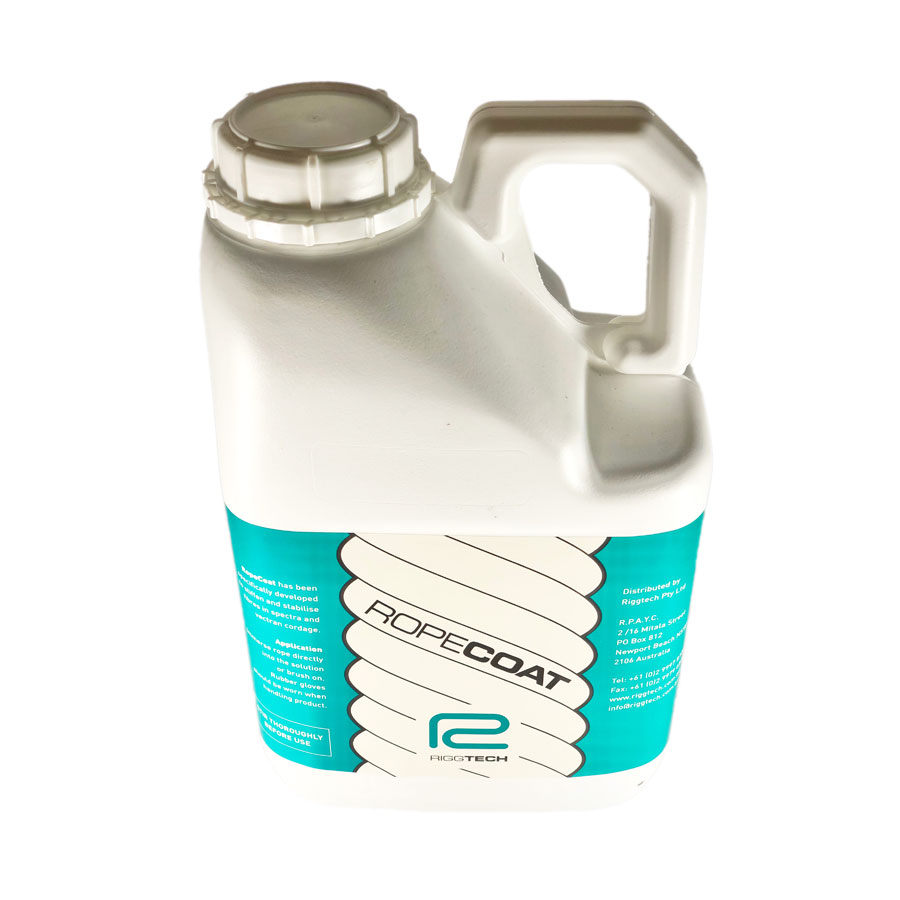
Description
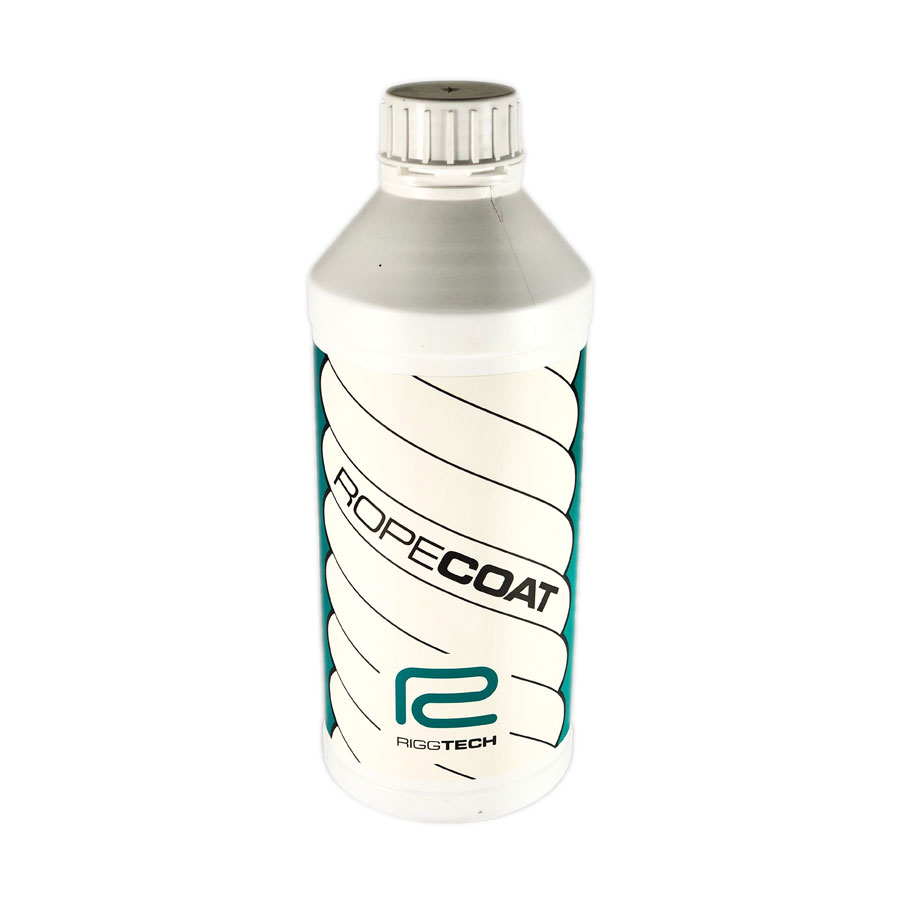
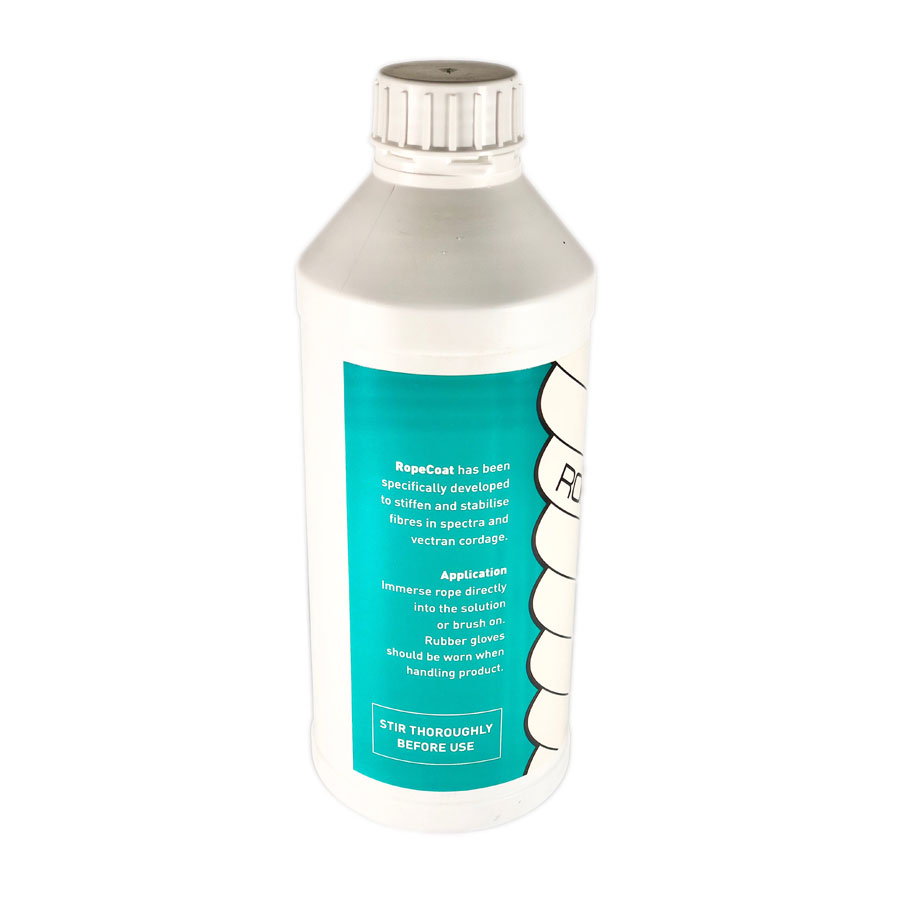
Applied as a paint, Ropecoat will stiffen and stabilize fibers in Dyneema, Spectra and Vectran cordage, it protects fibers from wear and UV sunlight. Ropecoat is a water-based, non-toxic paint product.
- Protects High Tech Rope Core.
- Stiffens Fibers.
- Cost Effective.
- Do it yourself or professional application.
It is far more economical to use Ropecoat than to replace the whole rope.
Racing yachts halyards and spinnaker braces often have a good portion of the outer cover removed to reduce weight, leaving the core fibers of the braided rope exposed and vulnerable. Rope core is the part that provides most of the strength to the rope and the cover is what protects the core. When the core is exposed, it can often snag on sharp objects and deteriorating more rapidly from UV rays.
Riggtech regularly use Ropecoat on halyard tips too. Often when we apply a chafe-guard jacket to halyard tips we also apply Ropecoat to further protect the rope from chafe or wear.
Never paint an entire rope with rope coat, we highly recommend ropecoated rope should never pass through a clutch or reach a winch, as the rope becomes too slippery.
Application:
- For Halyard ends/tips that have had the jacket stripped off or chafeguarded: Typically, we would fully submerge the rope in the Ropecoat momentarily to allow it to soak into the rope’s fibers. This also creates a better bond to the rope.
- Strain the excess Ropecoat off by pulling it through a clenched hand (with gloves on) above a bucket to allow the excess to drain back into the bucket to save wastage.
- Hang the line up in one long line in the sun to dry under low tension. This will make the excess Ropecoat bead up along the outside, wipe off excess with a rag.
- Only one coat required.
- Alternatively, you can brush the Ropecoat onto the cordage.
Drying:
- Avoid getting wet while drying.
- Lines can be touch dry in 4-8hrs depending on conditions (temperature, direct sunlight etc.)
- Best practice is to leave it for 24hrs before exposing to high loads.